Newsom’s high-speed rail crisis deepens as state aide admits mistakes and $126 billion price tag fuels “Stonehenge” ridicule
California’s high-speed rail project, approved by voters in 2008, has swelled from an estimated $33 billion to about $126 billion. After 18 years no operational tracks exist, provoking political backlash and “Stonehenge” mockery in the Central Valley.
Key takeaways
- The California High-Speed Rail Authority (CHSRA) now estimates the full San Francisco–Los Angeles system could cost about $126 billion, far above the $33 billion voters approved in 2008.
- Officials say the project faces roughly a $90 billion funding gap and an earliest projected opening of 2033, while only limited work has progressed between Bakersfield and Merced.
- Critics note roughly $15 billion has been spent on the Central Valley effort alone with no operating trains — fueling charges of waste and mismanagement.
- California Transportation Secretary Toks Omishakin acknowledged mistakes and said some criticism is “very fair”, even as state leaders insist they can find remaining funds.
Background: promise, scaleback and rising costs
Voters approved Proposition 1A in 2008 backing a sub‑three‑hour high-speed rail between San Francisco and Los Angeles with an initial cost estimate of $33 billion. The pitch promised fast travel, reduced congestion and a modern statewide rail backbone.
Timelines slipped and budgets climbed. By 2019 Gov. Gavin Newsom acknowledged there “simply isn’t a path from San Francisco to LA” under the original plan and shifted state focus to a Central Valley segment roughly 171 miles between Merced and Bakersfield — a move critics say few residents requested.
Cost escalation and federal pullback
Officials now estimate the full system could require about $126 billion, creating roughly a $90 billion funding gap. Some outside scenarios push totals even higher, with estimates reaching into the $135 billion range.
Federal support has been contentious: in 2025 a decision moved to terminate a $4.2 billion federal grant after the authority missed central commitments for a Central Valley opening. The federal government previously provided billions in grants, but critics say those funds now pale against the new cost estimate and the lack of operational service (congressional reporting).
Political reaction and public criticism
Transportation Secretary Sean P. Duffy described the stalled effort as “a humiliating emblem of government waste”, questioning delivery after more than a decade and billions spent with no operational trains. His remarks intensified calls for accountability from federal and state lawmakers (Transportation Department briefings).
“A complete bait and switch,” said Rep. Vince Fong, calling the California High-Speed Rail a “quintessential example of government waste and mismanagement.”
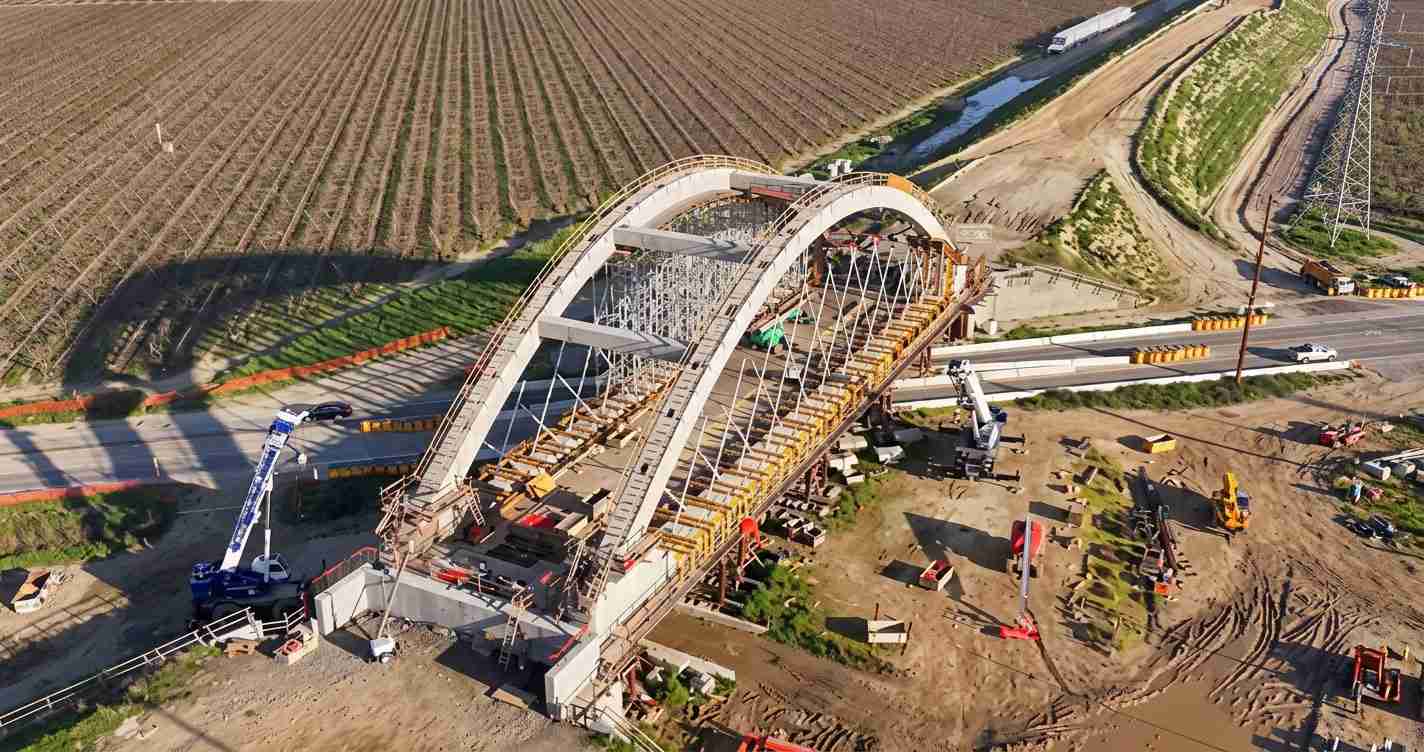
Locally, visible concrete columns and viaducts prompted derisive nicknames. In Fresno, residents and some leaders mock the exposed structures as “Stonehenge” — a label Assemblymember Alexandra Macedo has used in public criticism (CalMatters reporting).
State admissions and continuing commitment
Within state government the tone is candid but determined. Toks Omishakin told reporters that criticism is “very fair” and conceded that officials and voters underestimated what delivery would require. He also asserted that state leaders believe the remaining funds can be found to continue the effort (CalMatters; DOT briefings).
The High‑Speed Rail Authority maintains it will pursue completion. Officials say the earliest feasible opening for the Central Valley segment is 2033, a timeline that assumes major new funding and resolution of legal and management issues (video briefing and analysis).
Transparency, records and investigations
Transparency concerns have shadowed the program. Reporters and watchdogs have documented pushback on records requests and proposed limits on public access to documents; critics say such moves risk shielding mistakes from scrutiny (CalMatters; Capital Public Radio).
Other controversies include investigations into the CHSRA’s CEO and conflict-of-interest questions acknowledged by Gov. Newsom (related reporting and video), adding political pressure as leaders seek to reassure taxpayers and potential funders.
What’s built — and what’s not
After nearly two decades and roughly $15 billion spent on Central Valley work, large-scale visible construction remains limited. The Bakersfield‑to‑Merced section shows viaduct columns and right‑of‑way preparation, but there is no continuous track and no operating trains (video overview; CalMatters reporting).
Implications for San Luis Obispo, California
San Luis Obispo sits on the Central Coast between the metros the full high‑speed line would have connected. The scaled‑back program and long delays carry economic, political and social consequences for the county and region.
Economic impact
Businesses and local officials in San Luis Obispo lose anticipated benefits tied to faster links to Los Angeles and the Bay Area. Tourism, inter‑city commerce and real estate demand forecasts tied to a statewide fast link will likely be delayed, and transit‑oriented development plans may need reworking (analysis and reporting).
Political consequences
Moderate voters who backed the 2008 measure may feel betrayed by the ballooning price tag and long delays. Local leaders will face pressure to demand clearer plans, stronger oversight and assurances that regional transportation needs are not overlooked.
Social and community effects
Commuters between San Luis Obispo and major metros will likely continue relying on cars and conventional Amtrak service with limited frequency. Community groups that supported the rail for environmental or equity reasons must reassess local strategies for transit and emissions reductions.
Cultural relevance and public perception
The “Stonehenge” images and repeated headlines about waste and secrecy shape public perception. In regions that prize smart growth and careful planning, the rail program’s troubles could fuel skepticism toward future statewide initiatives.
Practical applications for daily life
For now, daily travel patterns in San Luis Obispo are unlikely to change soon. Local officials should continue focusing on bus improvements, roadway maintenance and regional rail projects that offer more certainty, while watching whether state leaders can close the funding gap.
Reporting notes and sources
- CalMatters reporting and records: CalMatters: California high-speed rail coverage
- Department of Transportation briefings and op‑ed: U.S. DOT briefing and op‑ed
- Congressional reporting on federal subsidies and oversight: U.S. Senate Commerce Committee report
- Related video reporting and analysis: video (WgUYXpZ5zuw) and video (VSD5OwJkT8s)
- Coverage of records access concerns: Capital Public Radio
Reporting note: This article preserves original facts, public statements and source links cited in reporting from CalMatters, the U.S. Department of Transportation, congressional records, video reporting and public watchdog coverage.