McEnroe’s mixed message: Tennis legend trash-talks pickleball’s sound and name while cashing in on exhibitions
John McEnroe derides pickleball’s sound, name and sporting merit, yet regularly headlines well-paid exhibitions — admitting he earned more in two pickleball weekends than from tennis — exposing public tension between his critique and cash incentives.
- Contradiction: McEnroe criticizes pickleball publicly while participating in lucrative exhibitions, a point raised by The Dink and the Miami Herald.
- Pay vs. posture: He said two pickleball weekends paid him more than some tennis work, reinforcing the financial motive behind appearances (The Dink; Miami Herald).
- Public reaction: Fans praise his candor; critics call him a “sellout” for cashing in on events like the Pickleball Slam (The Dink).
McEnroe’s criticism: sound, name and spectacle
John McEnroe has been a blunt voice on the subject, repeating familiar lines during The MacZone, the alternate French Open broadcast he co-hosts with his brother Patrick. He told tennis-turned-pickleball player Genie Bouchard that many people “leave the sport to play that damn stupid pickleball,” and asked whether she found the plastic ball sound annoying — remarks summarized by The Dink and the Miami Herald.
Key barbs: McEnroe contrasts the satisfying “pop” of a tennis ball with what he calls the “plink and plonk” of a pickleball, arguing the noise makes the sport feel toy-like rather than elite. He also derides the very name “pickleball”, calling it goofy and hard to take seriously. Those comments echo earlier declarations that pickleball “sucks” and that hearing it’s the “fastest-growing sport” makes him “want to throw up” (The Dink; Miami Herald).
Playing for money, not conversion
The contradiction is stark: while McEnroe mocks the sport, he also takes headline roles at big-money exhibitions. Reporting around the celebrity Pickleball Slam documented large appearance fees and prizes; McEnroe’s participation illustrated how even skeptical legends can be drawn to high payouts (The Dink; Miami Herald).
“I played pickleball two weekends and was paid more for that than I earned playing tennis,”
That admission — blunt and self-aware — fuels criticism that he is selling out: collecting appearance fees rather than converting to the sport or sincerely promoting it.
Is McEnroe a good pickleball player?
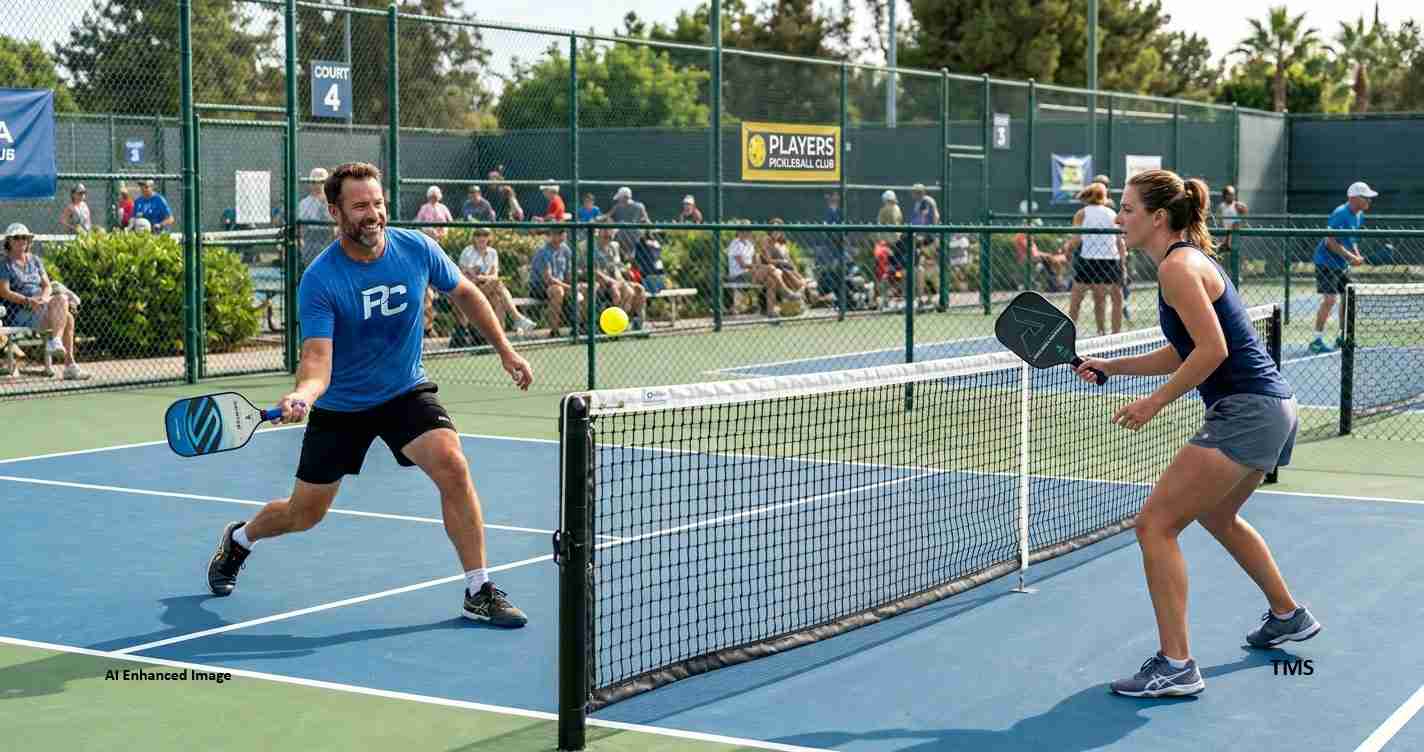
Observers say McEnroe is better at pickleball than his sniping suggests. Video and fan accounts show him holding his own in exhibitions and leaning into his on-court persona to entertain. In one televised match he joked disputing a pickleball call was “the first argument I’ve won in 40 years.” Clips of his play and commentary have circulated on YouTube and other platforms (YouTube).
Promotional value: Promoters trade on McEnroe’s temper and star power — his competitiveness and persona attract viewers and ticket buyers even when he publicly dissents.
Television, spectacle and the future of tennis
McEnroe’s concerns extend beyond aesthetics. He argues pickleball is a harder sell on TV because the smaller court, different pacing and noisier ball make it less visually dramatic than tennis. He likens the effort to televise pickleball to trying to make table tennis into a broadcast spectacle — a show that may not sustain long-form viewer engagement (Miami Herald).
Still, he concedes there can be crossover: some who try pickleball may watch tennis, and the social element of pickleball can expand overall interest in racquet sports.
Where the critique fits in wider coverage
McEnroe’s take is one of many voices in a broader debate. Critics use terms like toy-like or gym-classish to describe pickleball’s wiffle-ball feel, while supporters tout accessibility, community-building and ease of entry. The tension often frames a question about which forms of sport communities value: the elite, long-form contest of tennis or the quick, social, inclusive rounds of pickleball (The Dink; Miami Herald).
Pickleball Slam and the money question
Events like the Pickleball Slam highlight the economics: celebrity exhibitions paid large appearance fees and purses, drawing names from tennis and beyond. McEnroe’s involvement underscores how financial incentives can prompt top stars to test the waters regardless of their public critiques (The Dink; Miami Herald).
Public reaction and social media
On social platforms, reactions split: some applaud McEnroe’s candor; others call him hypocritical. Pickleball enthusiasts champion rapid growth and community benefits, while traditionalists defend tennis as an art form. Threads and clips — including a discussion on Tennis Warehouse and various YouTube videos — illustrate the divide.
Implications for San Luis Obispo, California
Economic impact
San Luis Obispo’s recreation economy could benefit from a pickleball boom: courts, leagues and tournaments attract visitors who spend on lodging, food and retail. High-profile exhibitions touring the Central Coast could boost hospitality revenues (The Dink).
Political consequences
City leaders and park officials may face trade-offs. Converting tennis courts to multi-use or adding pickleball lines is cheaper than building new facilities but can provoke pushback from tennis players. Court access and scheduling debates can become municipal political issues requiring careful allocation and stakeholder outreach (Miami Herald).
Social effects
Pickleball’s accessibility appeals to retirees, students and families in San Luis Obispo, offering social and fitness benefits. However, noise complaints and court congestion have led some communities to adopt hours, buffers or permit systems. Planners should anticipate growth and design schedules to serve diverse users (The Dink).
Cultural relevance
The debate taps local values: residents will weigh pickleball as a community pastime versus a noisy encroachment on traditional sports spaces. Outreach and pilot programs can bridge cultural divides by demonstrating inclusive programming and shared use arrangements.
Practical applications
Recommendations for parks and recreation departments: survey court use, consider dedicated pickleball courts where demand is highest, schedule protected tennis training times, and plan noise mitigation. Partnerships with community centers and universities can support coaching and youth outreach (The Dink).
Reporting and sources
Reporting draws on event coverage, commentary and public clips from the following sources: