Trump officials say California’s reliance on foreign oil is now a national security risk, push to restart offshore Sable project
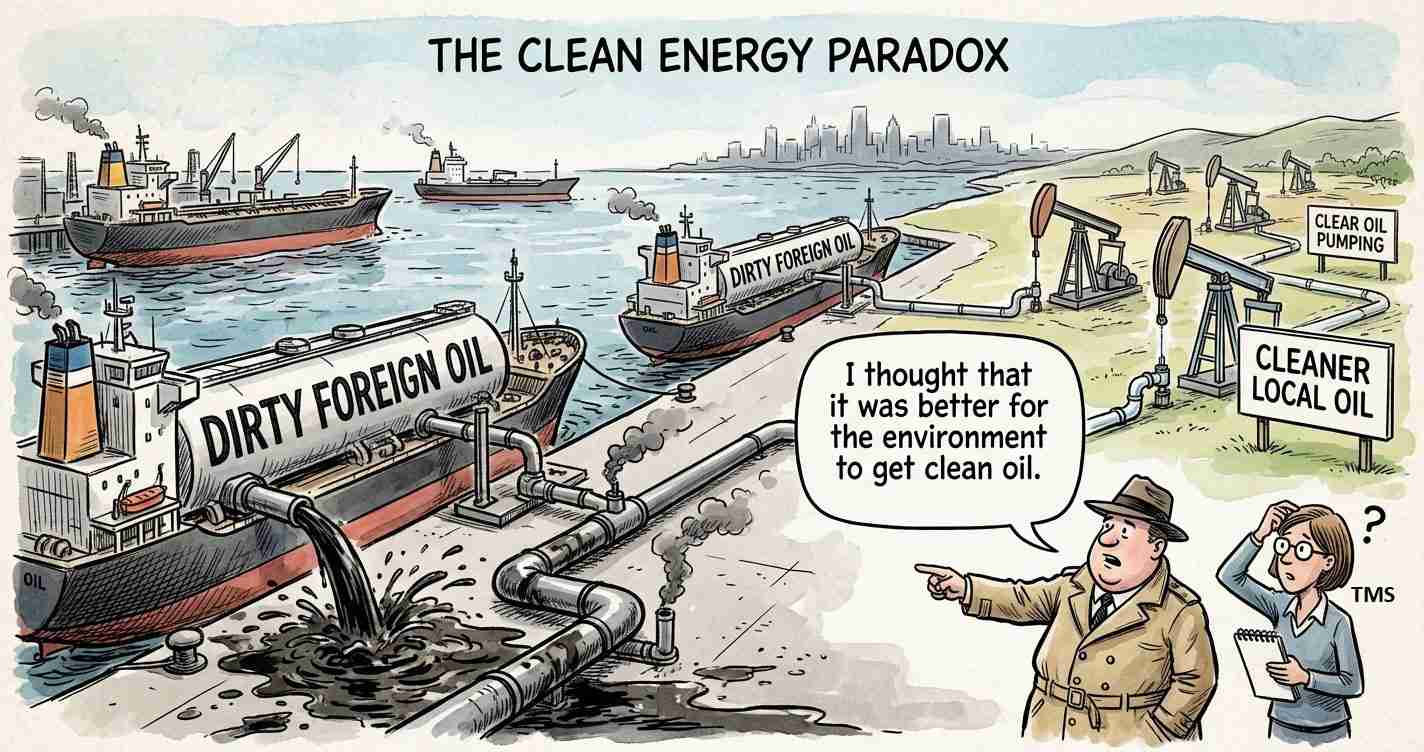
Former Trump officials warn California’s dependence on foreign crude — now exceeding 60% of refined supplies — poses a national security risk, urging steps to restart offshore production like the Sable project to bolster military and fuel resilience.
Key takeaways
- High import share: Officials say over 60% of crude refined in California now comes from foreign suppliers.
- Military vulnerability: They note more than 30 U.S. military facilities in California depend on fuel shipped or refined in the state.
- Federal push: The administration is pressing to restart the offshore Sable project and to invoke emergency powers to reopen a shuttered pipeline system (E&E News).
- State pushback: Governor Gavin Newsom has vowed to fight federal moves to reopen coastal infrastructure and to defend state authority (California Governor’s Office).
Background
Former Trump administration officials have publicly framed California’s fall in in‑state oil production as both an economic and security problem. They point to decades of declining local output, refinery conversions to renewable fuels, and state climate policies that — they argue — have reduced domestic supply and expanded the state’s reliance on foreign crude. Key reporting and federal analysis underlie the claim that the import share now exceeds 60% (DOE fact sheet).
What officials are saying
Energy Secretary Chris Wright has warned that “we have 30 military facilities in California, which gets over 60% of its oil imported from overseas,” urging that restarting previously drilled offshore wells could “increase energy security for our military operations in California and start to change the game for businesses and consumers” (Fox Business).
Interior Secretary Doug Burgum blamed state permitting and regulatory rules that he said have “regulated refineries out of existence,” naming recent suppliers such as Iraq as evidence of vulnerability. Burgum called the situation “an absolute national security risk” and described California as an “energy desert, an energy island,” tying domestic production to manufacturing, electricity reliability and technologies like artificial intelligence (Fox Business; VibeTrader).
California production trends and imports
California remains one of the largest energy consumers in the U.S., but its in‑state crude production has declined for decades. Observers cite resource declines, environmental rules, climate goals and refinery conversions that have reduced local refining capacity. The cumulative effect: refineries in California now process a growing share of foreign crude — officials point to that share as exceeding 60% (Fox Business; DOE).
National security arguments
The administration’s argument links three claims: a high foreign-import share, supply lines that can transit geopolitical chokepoints (such as the Strait of Hormuz), and the dependence of many California military bases on fuel refined in the state. The Department of Energy has described those combined factors as creating “serious national security threats” and has invoked extraordinary authorities to address them (E&E News).
Policy tool: Officials cite instruments such as the Defense Production Act and emergency authorities to justify restarting local infrastructure and previously permitted wells, arguing shorter supply chains would better secure what they call the “California military oil supply.”
Sable Oil Project and pipeline moves
Wright and Burgum have highlighted the Sable offshore project near Santa Barbara as a near‑term source of domestic barrels. They argue that restarting previously drilled wells and using existing infrastructure — after safety reviews — could raise local output without new exploration (Fox Business).
Separately, the Energy Department invoked emergency powers to press for restarting a long‑shuttered offshore pipeline system taken offline after the 2015 spill, calling it “vital to our national security and defense.” California regulators and environmental groups have pushed back, citing past damage to wildlife and coastlines (E&E News; California Governor’s Office).
California’s reaction
Governor Gavin Newsom condemned the federal actions, accusing the administration of “exploiting” international tensions to illegally invoke emergency powers and to force the reopening of coastal infrastructure linked to a major 2015 spill. Newsom pledged legal resistance to protect the coastline and state authority (California Governor’s Office).
Academic and independent balance
Local researchers urge a measured assessment of how much additional oil projects like Sable would produce and whether those barrels would meaningfully change statewide import shares or retail fuel prices. A UC Santa Barbara professor crunched potential outputs and economic impacts, concluding that added domestic barrels could help locally but likely have a modest effect on California’s broad market; other tools (strategic reserves, diversified imports, conservation) also shape supply security (KEYT).
Implications for San Luis Obispo
Economic: San Luis Obispo County — with an economy built on tourism, agriculture and coastal resources — could see short‑term jobs in servicing and logistics if offshore production restarts. But local studies and environmental advocates warn that spill risks would damage fisheries, tourism and recreation, core sectors of the county’s economy (KEYT).
Military readiness: The county lies near training and logistics areas used by U.S. forces. Officials say local production could reduce the chance that fuel shortages affect training or operations, though planners must weigh storage, distribution and environmental constraints (Fox Business; DOE).
Daily life: While supply-path changes can affect local gas prices and availability, experts caution that global markets and statewide import patterns mean price effects in San Luis Obispo may be limited unless production or refining shifts are large and sustained.
Political consequences: The debate is likely to sharpen local politics: some residents will prioritize national security and lower fuel costs; others will prioritize coastal protection and climate goals, aligning with Governor Newsom’s resistance.
What to watch next
- Federal legal moves to enforce pipeline restarts and state court challenges.
- Detailed production estimates for the Sable project and assessments of how many barrels could be added.
- Updated import data showing whether domestic changes materially cut California’s foreign crude share.
- Local economic projections and environmental risk assessments that San Luis Obispo leaders will use to weigh tradeoffs.
Sources
Primary reporting and documents referenced in this article include: Fox Business report; Department of Energy fact sheet; E&E News coverage; California Governor’s Office statement; and local analysis reported by KEYT.