Ivanpah’s Bright Promise, Dark Costs: Mojave Desert Solar Plant Draws Scrutiny Over Bird Deaths, Carbon and Cost
The Ivanpah Solar Electric Generating System in the Mojave Desert is a 392 MW concentrated solar thermal plant, operational since 2014; it generates renewable power but draws scrutiny over bird deaths, startup carbon emissions and high costs.
- Large-scale concentrated solar — Ivanpah pioneered power-tower technology at utility scale while occupying roughly 3,500–4,000 acres.
- Wildlife impacts — Federal monitoring and reporting document thousands of birds injured or killed by concentrated beams of sunlight (solar flux).
- Carbon and gas use — Daily natural-gas startups produce substantial CO2, complicating claims of purely “clean” energy.
- Costs and contracts — Built with major federal backing, Ivanpah has faced questions about economics versus cheaper PV-plus-storage alternatives.
Key information
Name: Ivanpah Solar Electric Generating System (Ivanpah)
Location: Mojave Desert near the California–Nevada border (Ivanpah, CA)
Capacity: 392 megawatts (three units: 126 MW, 133 MW, 133 MW) — see Ivanpah Solar Power Facility
Size: About 3,500–4,000 acres, roughly 173,500 heliostats with about 347,000 mirrors — see Ivanpah Solar Power Facility and Bechtel project notes
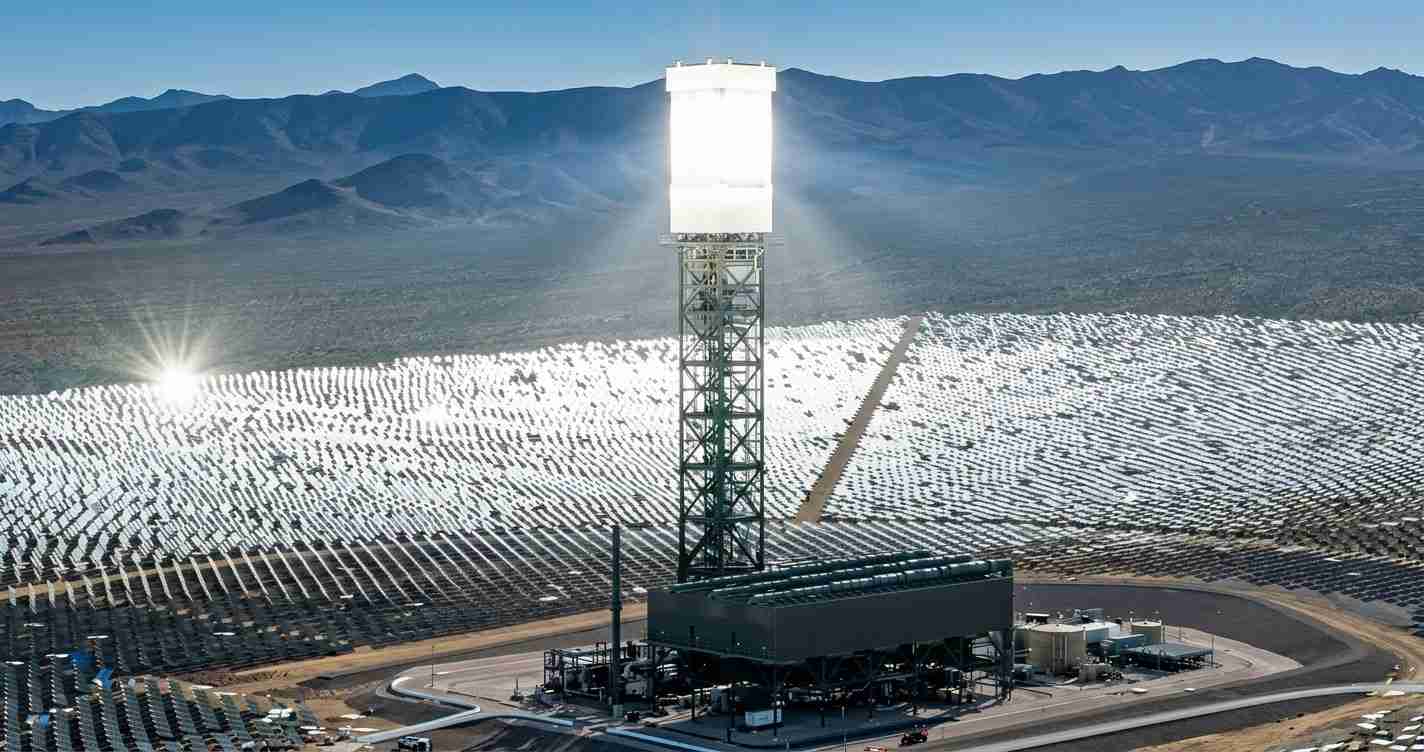
Technology: Power-tower concentrated solar thermal; mirrors focus sunlight on three 459-foot towers to heat water into steam at about 550°C — U.S. Department of Energy overview: U.S. Department of Energy — Ivanpah
Start-up fuel: Uses natural gas to start turbines each morning; produces significant CO2 emissions tied to daily startups — see Ivanpah Solar Power Facility and U.S. Department of Energy — Ivanpah
Funding: Built with a $1.6 billion Department of Energy loan guarantee; additional federal support noted — see U.S. Department of Energy — Ivanpah and Ivanpah Solar Power Facility
Environmental concerns: Thousands of bird deaths documented from solar flux; impacts on desert habitat noted — reporting compiled at Environment & Energy Leader and Ivanpah Solar Power Facility
How Ivanpah works and why it stood out
Ivanpah was designed to demonstrate a different method to produce utility-scale solar power. Instead of photovoltaic panels, the project uses heliostats — computer-controlled mirrors that track the sun and focus light on towers.
Each heliostat reflects sunlight up to one of three 459-foot towers. The concentrated light produces intense heat at the tower receivers, heating water into steam. The steam then drives turbines that generate electricity, per the Ivanpah Solar Power Facility and the U.S. Department of Energy.
At opening in 2014, Ivanpah was among the largest concentrated solar thermal plants in the world. It was expected to produce nearly 1 million MWh per year and supply tens of thousands of homes under contract, with projections of significant lifecycle CO2 reductions compared with fossil generation (Energy Monitor).
Solar flux and wildlife: documented bird deaths
A major environmental concern at Ivanpah has been wildlife impacts from concentrated beams of sunlight known as solar flux. Federal monitoring and independent reports documented thousands of birds injured or killed after flying through these intense beams (Ivanpah Solar Power Facility).
“Videos and photos showed smoke and small charred birds near the base of towers,” monitoring records and reporting summarized at Environment & Energy Leader describe.
Bright towers attract insects and insectivorous birds; some birds become exposed to the concentrated light and are burned or stunned in flight. Monitoring documented affected species across multiple years, and while exact tallies vary by source, the losses are consistently described as significant and troubling.
Carbon, gas use and “clean” energy questions
Ivanpah requires natural gas each morning to heat boilers and start turbines when sunlight is insufficient. That repeated daily use of gas produces carbon dioxide; estimates place startup-related CO2 emissions at tens of thousands of metric tons annually, roughly comparable to the annual energy emissions of thousands of homes (Ivanpah Solar Power Facility, U.S. Department of Energy).
Critics argue the hybrid use of fossil fuel undermines claims of purely “green” performance, while supporters counter that lifecycle emissions remain lower than a conventionally fossil-fueled plant and that reliable morning starts help grid stability (Energy Monitor).
Costs, contracts and federal backing
Ivanpah was built with substantial federal backing, including a $1.6 billion Department of Energy loan guarantee (U.S. Department of Energy — Ivanpah). That public investment and follow-on incentives have been scrutinized as cheaper photovoltaic and battery options emerged.
By the mid-2020s regulators and utilities questioned Ivanpah’s economics. Reporting notes that some contracts were considered for termination because the plant’s power prices were higher than modern alternatives; however, California regulators blocked a full shutdown, citing grid needs (Environment & Energy Leader, Ivanpah Solar Power Facility).
Operational performance and changes
Ivanpah struggled in its first year and initially underperformed 2014 projections, though production stabilized and most units met contracted output by 2017. The plant lacks long-term thermal storage and therefore can only generate when sunlight is available at the mirrors — a limitation compared with PV-plus-storage systems (Ivanpah Solar Power Facility, Energy Monitor).
Environmental trade-offs and broader debates
Ivanpah highlights a core policy question: how should “clean” energy be measured? Supporters emphasize renewable generation and lifecycle emissions reductions. Critics point to large land footprint, wildlife harm, ongoing gas use and comparatively high costs versus modern PV and batteries.
The case informs debates on siting rules, wildlife protections and whether faster deployment of cheaper PV-plus-storage is preferable to some concentrated solar projects (Energy Monitor; Ensia).
Implications for San Luis Obispo, California
Economic and energy implications:
- Grid reliability and costs: State-level decisions about Ivanpah’s contracts and generation can influence supply choices, prices and planning that ripple to communities such as San Luis Obispo.
- Market signals: Investors and local project planners may favor photovoltaic arrays and storage over older concentrated-solar designs, affecting local clean-energy investments and jobs (Energy Monitor).
Environmental and social effects:
- Wildlife awareness: SLO residents and conservation groups may cite Ivanpah as a cautionary example and press for stronger wildlife studies and siting rules for local projects.
- Public land and cultural values: The plant’s large footprint raises questions about trade-offs when using public lands for industrial-scale renewable projects (Ensia).
Practical local impacts: Utilities and policymakers in San Luis Obispo will watch regulatory outcomes closely; shifts toward PV-plus-storage could yield lower-cost, more flexible resources for the county. The Ivanpah experience is likely to influence local permitting, environmental review and mitigation requirements.
Who to watch and what to expect
The plant’s future will be shaped by the California Public Utilities Commission, the U.S. Department of Energy and project owners. San Luis Obispo leaders and residents should expect ongoing debate about the trade-offs among clean-energy goals, costs and ecosystem protection as the state increasingly adopts newer technologies (Environment & Energy Leader).
Sources and reporting
This article draws on public reporting and technical summaries, including:
- Wikipedia — Ivanpah Solar Power Facility
- U.S. Department of Energy — Ivanpah project summary
- Bechtel project notes
- Energy Monitor project review
- Ensia — image and evolution coverage
- Environment & Energy Leader — reporting on economic and regulatory shifts
Notable quote:
“Ivanpah demonstrates both the promise and the trade-offs of large-scale renewable projects — significant generation potential, but real ecological and economic costs that shape future energy choices.”