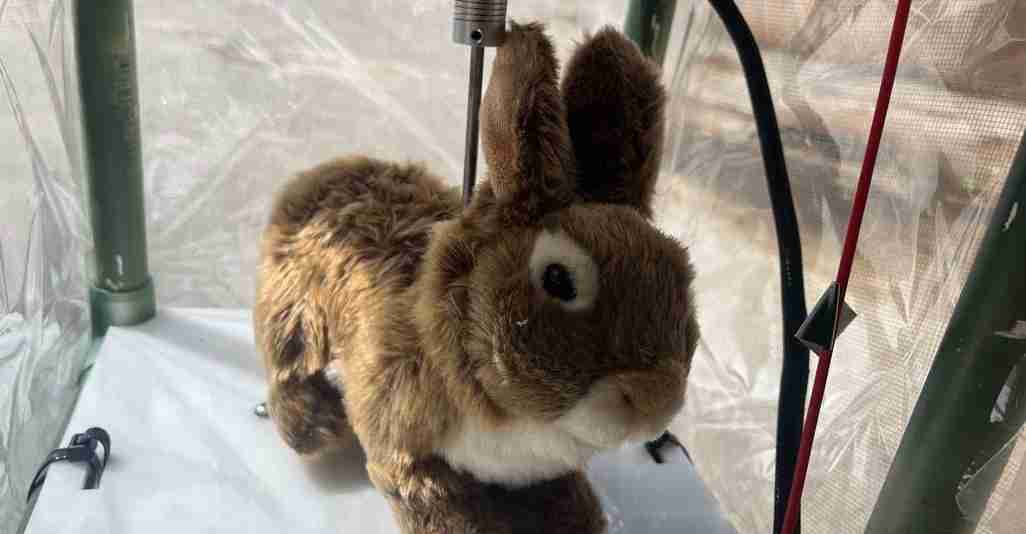
Florida Deploys AI-Powered “Robot Rabbits” to Trap Burmese Pythons in the Everglades
Florida’s South Florida Water Management District and University of Florida researchers are deploying solar-powered, AI-monitored robot rabbits across the Everglades to detect and lure invasive Burmese pythons, aiming to improve rapid removal and protect native wildlife.
- AI-driven detection: Solar-powered robot rabbits with cameras and heaters use AI to identify and alert teams to potential Burmese pythons.
- Early results promising: Between 40 and 120 units tested in 2024–2025 at roughly $4,000 each; refinements are ongoing.
- Conservation aim: The program targets dramatic declines in native small mammals and birds and complements broader restoration efforts.
How the robot rabbit program works
SFWMD and University of Florida researchers modified toy rabbits to mimic real marsh rabbits — the preferred prey of Burmese pythons — by adding heaters for body warmth, motors for subtle movement, scent diffusion systems and solar panels for extended field operation.
Sources cited by officials and reporters include SFWMD press materials and a University of Florida feature on the research team (UF biology feature).
“Each robot sits in a small pen with a camera. AI analyzes video in real time to detect approaching snakes and distinguish Burmese pythons from native species,” officials say.
When the AI flags a likely python, the system sends an alert to SFWMD field teams, which respond to remove the snake and humanely euthanize if necessary. Early public reporting and analysis are summarized by outlets such as CBS News and Route Fifty.
Why robotic lures are needed
Burmese pythons are large, secretive predators with no natural local predators in South Florida. Park and wildlife officials report severe declines in native species — in some sites, small mammal numbers have dropped by as much as 95%. Traditional methods have removed thousands of snakes but have not halted population growth or reproduction, so the robotic-lure approach is intended to increase detection speed and targeting.
Past efforts — including bounty hunts, the Florida Python Challenge and certified removal agents — contributed to more than 11,000 pythons removed in 2023, but officials note that female pythons can lay 50–100 eggs per clutch, underscoring the need for new tactics (CBS News; Route Fifty).
Scale, cost and technical challenges
The district deployed between 40 and 120 robot rabbits in field tests during 2024–2025; each unit costs about $4,000 to build. The program budget covers hardware, solar panels, cameras, AI development and field response teams (CBS News; Route Fifty).
Remaining hurdles include AI accuracy in distinguishing Burmese pythons from harmless native snakes, scent-diffusion effectiveness in wetland conditions, and the logistical challenge of field teams quickly reaching alerts in remote, flooded terrain. Officials call early results promising but emphasize more tests and upgrades are needed (SFWMD news release).
Collaboration and conservation context
SFWMD leads the program in collaboration with state and federal partners including the Florida Fish and Wildlife Conservation Commission, the National Park Service, and the U.S. Fish and Wildlife Service. Agencies warn Burmese pythons can undermine multimillion‑dollar Everglades restoration investments by preventing native wildlife from returning to restored habitats (Route Fifty; SFWMD Python Program).
University of Florida researchers, including Dr. Chris Dutton, helped design robots and detection systems; media features and video have highlighted the devices and technical work (UF biology feature; video: YouTube video; AP newsroom feature).
Ethics, wildlife welfare and public reaction
The switch from live-baiting to robotic lures addresses animal welfare concerns and logistical limits. Live baiting required animal care and expense; robots are reusable and reduce risk to people and animals. Public reaction has been strong due to the striking visuals and the severity of the python problem (CBS News; Palm Beach Post).
Measuring success
Officials emphasize the program is experimental. Success metrics include the number of pythons found and removed per unit time, reductions in predation pressure over months or years, and measurable recovery of monitored wildlife populations. SFWMD and UF plan iterative improvements to sensors, scent systems and AI to boost accuracy (CBS News; Route Fifty).
Sources and further reading
- CBS News: Burmese pythons and robot rabbits overview
- SFWMD news release: Using robotic rabbits to remove invasive pythons
- Route Fifty: Emerging-tech report on robot bunnies
- University of Florida Biology feature on Dr. Chris Dutton’s work
- Palm Beach Post: Local reporting on UF robot rabbits
- YouTube video feature
- AP Newsroom video detail
- SFWMD Python Program overview
Implications for San Luis Obispo, California
The Florida robot rabbit project offers transferable lessons for San Luis Obispo County officials and land managers. Key considerations include:
- Ecological lessons: Technology can aid early detection and rapid response to invasive species; analogous sensor-and-bait strategies could target feral pigs, rats or invasive plants.
- Habitat restoration and monitoring: Solar-powered sensors and cameras could track wildlife recovery after restoration of oak woodlands, coastal habitats and riparian zones.
- Budget choices: Each robot costs about $4,000; pilot projects may require grants or partnerships to offset upfront costs.
- Public engagement: Striking, media-friendly projects can raise awareness and boost volunteer and reporting efforts.
- Policy and legal review: Any local deployment must comply with California wildlife regulations, permitting, and animal-welfare requirements; robots reduce live-bait concerns but still require oversight.
Reporting note
This story synthesizes official materials and news coverage from SFWMD, University of Florida researchers, and national reporting. The robot rabbit program remains an active experiment: officials say ongoing refinements to AI detection, scent systems and field response will determine whether this novel tool can be scaled effectively (CBS News; SFWMD press materials).