Robot in a Seat: Southwest Flight Delayed After Bebop’s Oversized Lithium Battery Is Removed
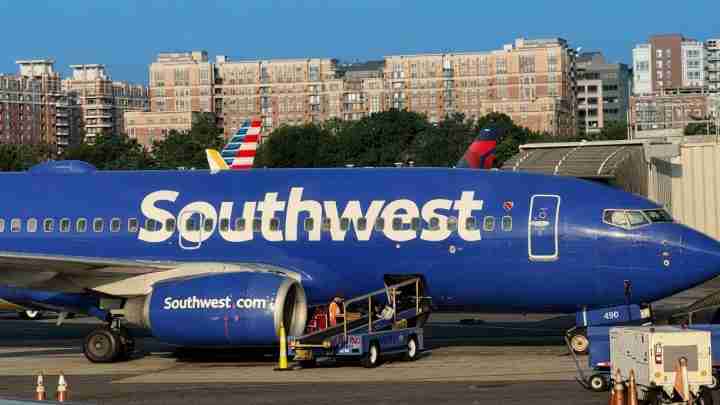
A Southwest Airlines flight from Oakland to San Diego was delayed about an hour after handlers removed the oversized lithium battery from Bebop, a roughly 70-pound humanoid robot, when its battery exceeded airline and federal limits.
- Flight disruption: Southwest Flight 1568 was delayed ~60 minutes after Bebop’s battery was confiscated at the gate.
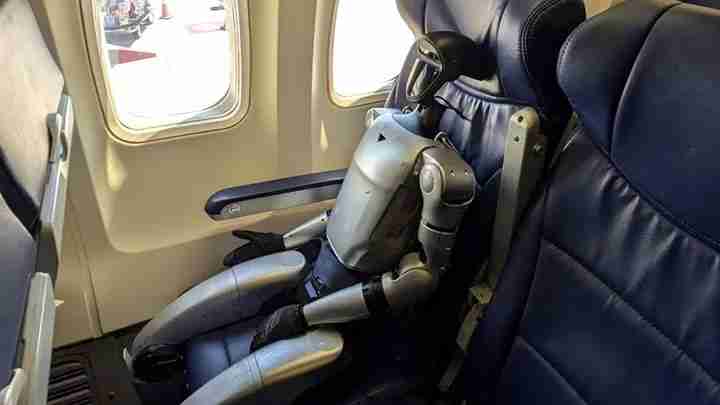
- Device details: Bebop is a 4-foot, roughly 70–75-pound humanoid robot owned by Elite Event Robotics of Dallas, Texas, traveling with an extra purchased seat.
- Safety action: The oversized lithium battery was removed and left with airline personnel; the robot continued onboard battery-free.
Key information
Flight: Southwest Airlines Flight 1568, Oakland (OAK) to San Diego (SAN), Thursday, April 30, 2026. (Sources: Fox News Travel coverage, NDTV)
Passenger-device: Bebop, a 4-foot, roughly 70–75-pound humanoid robot owned by Elite Event Robotics of Dallas, Texas. (Sources: Fox News, NDTV, company Instagram)
Cause of delay: The robot’s lithium battery exceeded airline limits and had to be removed at the airline’s request, delaying the flight by about an hour. (Sources: Southwest statement cited in Fox News and NDTV)
Resolution: Battery removed and left with airline personnel; Bebop flew battery-free. The battery later was shipped separately to the robot’s next event. (Sources: Fox News; Elite Event Robotics Instagram post)
What happened at the gate
Elite Event Robotics’ team brought Bebop to Oakland’s gate after the robot arrived on an earlier leg from Dallas. The company rents interactive humanoid robots for events; Bebop drew attention at the gate, dancing and greeting families as people filmed and photographed the scene.
Handlers purchased an extra seat after Bebop plus its transport case exceeded Southwest’s 100-pound limit for carry-on or checked items. Southwest later confirmed a customer may purchase an extra seat to accommodate a large device; airline staff moved the robot from an aisle to a window seat to comply with cabin safety rules.
“A crowd of onlookers and children giving the robot high-fives,” handler Eily Ben-Abraham told media, according to Fox News Digital.
Why the flight was delayed
The boarding process stalled when crew discovered Bebop’s lithium battery exceeded allowable capacity. Southwest told reporters a passenger had purchased a seat for a device, but the device’s battery exceeded the maximum allowable size, so the customer was asked to remove it. At the airline’s request, the handler removed the battery and turned it over to airline personnel, delaying departure about an hour.
Lithium batteries are tightly regulated for air travel because they can pose a fire risk if they overheat or are damaged. Federal and Transportation Security Administration rules limit capacity and carriage of lithium-ion batteries, especially spare batteries not installed in a device. See TSA guidance.
Statements from involved parties
- Southwest Airlines: Confirmed a device had been given an extra seat and that the device’s battery exceeded allowable size limits; emphasized safety and praised crew handling. (Source: Fox News coverage quoting Southwest)
- Elite Event Robotics: Posted on Instagram, “Delayed but worth the wait. Bebop finally made it on board, and safe to say he’s still the main attraction wherever he lands.” The firm plans to transport robots on future flights without batteries to avoid similar issues.
- Handler account: Eily Ben-Abraham told Fox News Digital the earlier flight from Dallas to Oakland had no issue; shipping the battery onward to a Chicago event required family members to drive overnight to get the battery to the next city.
Public reaction and questions raised
Gate videos and social posts show passengers smiling, laughing and recording Bebop dancing. However, reactions were mixed: some called it a publicity stunt that inconvenienced other travelers. One passenger reportedly missed a connection and paid a $400 fee for a new flight after the delay, per NDTV.
“That’s not a passenger, that’s freight,” one social media commenter wrote, highlighting a broader debate about whether event robots belong in passenger cabins or should be transported as cargo under stricter rules.
Regulatory context: batteries and airline policy
Federal guidance and airline policies aim to minimize fire risk from lithium batteries. TSA and FAA guidance allow batteries installed in devices if they meet watt-hour limits; spare batteries often face stricter rules or are prohibited in checked baggage. Airlines likewise set weight and size rules that vary by carrier.
Southwest’s statement that the battery “exceeded the maximum allowable size” aligns with this framework. The handler’s removal of the battery and the airline’s request reflect standard safety procedures when a battery is outside permitted limits. See full TSA guidance.
Visual record and media coverage
Local TV clips uploaded to YouTube show Bebop entertaining passengers at the gate and airline staff moving the device to a window seat during final checks. The videos align with accounts that the device attracted attention and that the delay followed identification of the battery issue.
See gate coverage: Gate video coverage (clip 1) and Gate video coverage (clip 2).
Implications for San Luis Obispo, California
Economic impact: San Luis Obispo hosts events that sometimes hire novelty entertainment like humanoid robots. If transporting robots becomes more complex, local planners may face higher costs or logistics delays. Rental firms servicing the Central Coast may need to budget for extra shipping, overnight transfers or freight.
Logistics and local businesses: Hotels, venues and production companies should confirm how robots will be transported and powered—robots arriving battery-free may need on-site power or spare battery handling.
Political and regulatory consequences: Local policymakers can use this incident to include transport and safety questions in vendor contracts and to advocate for clearer federal-to-airline guidance on emerging humanoid devices used in entertainment.
Social and cultural effects: The gate footage shows appetite for tech-driven attractions, but event planners should weigh entertainment value against potential traveler disruption.
Practical applications for residents
If you’re hiring robots for community events, ask vendors:
- How will the robot be transported (air cargo, extra seat, or ground transport)?
- Will batteries be installed on arrival, or will the robot operate battery-free?
- Who is responsible for delays, extra shipping, or missed connections?
Planning ahead reduces surprises and helps local events benefit from tech attractions without disrupting travel or schedules.
Sources and further reading
- Fox News Travel coverage (quotes and handler interview)
- NDTV report summarizing incident and passenger reactions
- Elite Event Robotics Instagram (company post about the delay)
- Gate video coverage (clip 1) and (clip 2)
- TSA guidance on lithium batteries and air travel
[Reporting based on media accounts and company posts cited above. Flight number and dates reported by news outlets; handler comments attributed to Fox News Digital coverage.]