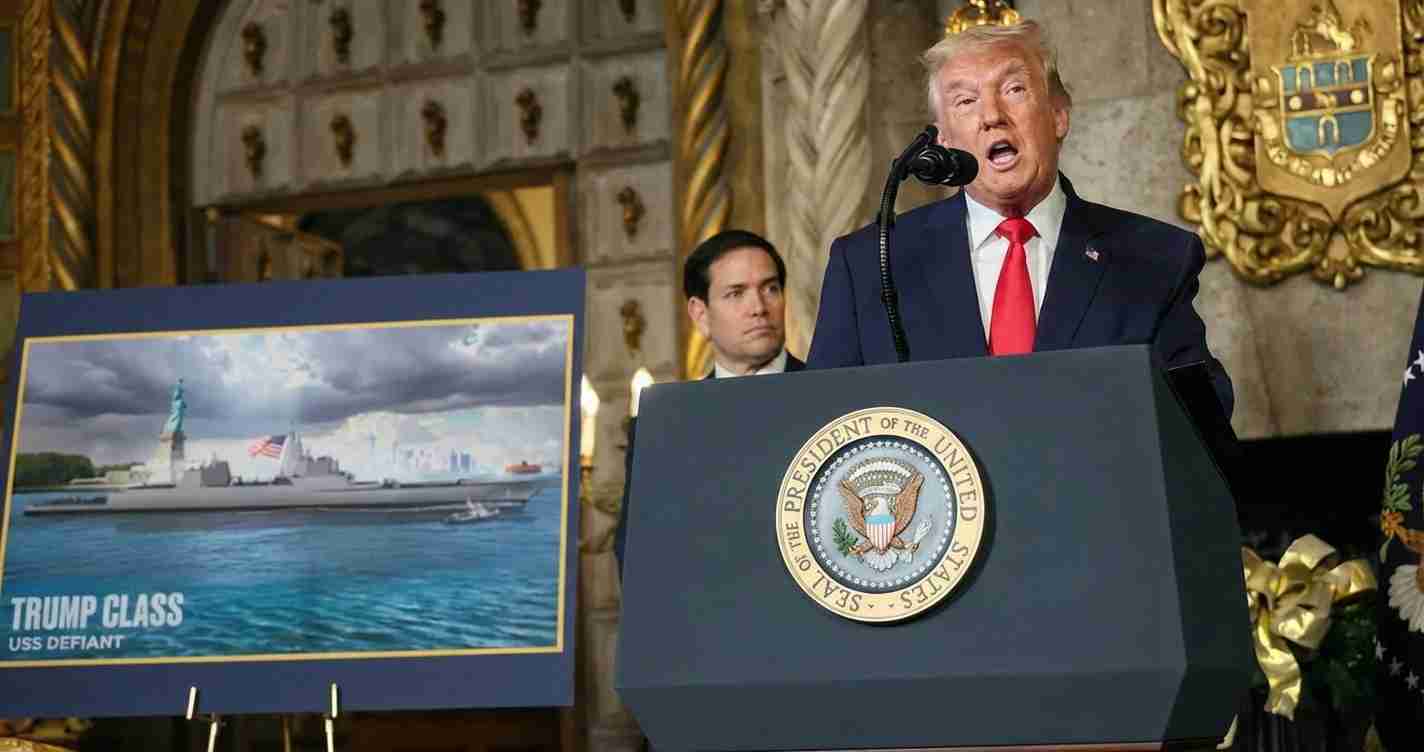
Trump unveils “Golden Fleet” of nuclear-armed battleships, pledges rapid build to expand US naval power
President Donald Trump unveiled the “Golden Fleet”—a proposed series of nuclear-armed, “Trump class” battleships—on Dec. 22, 2025, promising an accelerated build to expand U.S. naval power, boost shipbuilding and speed procurement efforts.
- Immediate procurement: Two ships ordered first, with plans to scale to 10 and ultimately 20–25 vessels.
- Fast timeline: Trump said the first two could arrive within about 2.5 years; administration projections suggest a 2028 launch target for the first ship.
- Nuclear-armed claims: Reports and administration remarks described the ships as extremely large, nuclear-armed surface combatants sometimes called the “Trump class.”
- Details missing: Cost, technical specifications, environmental reviews and congressional funding plans were not released at the announcement.
Overview
On Dec. 22, 2025, at a Florida event, President Donald Trump, joined by Secretary of War Pete Hegseth and Secretary of the Navy John Phelan, unveiled a proposal for a new series of battleships dubbed the “Golden Fleet.” The administration framed the program as a way to expand U.S. naval power, accelerate defense production, and strengthen the domestic shipbuilding supply chain.
What Trump and his team announced
Speaking at the event, Trump described the project as producing some of the most powerful surface warships in U.S. history and touted a rapid schedule. Video of the announcement is publicly available; the president said the first two ships could be delivered within roughly two and a half years. Video of the event captures the remarks and on-stage assertions.
President Trump: “More powerful than any ever built” — comments shown in the video of the announcement.
How the ships are being described
Administration remarks and media reports described the proposed vessels as very large, nuclear-armed surface combatants; some outlets have used the label “Trump class.” Coverage by naval-focused outlets highlighted claims about nuclear armament and scale. See NavalNews reporting for those technical claims.
Procurement timeline and production goals
Announced plan: immediate procurement of two ships, scaling to 10, and an eventual goal of 20–25 vessels. Officials emphasized reviving U.S. shipbuilding capacity and supply chains but did not provide cost estimates, full designs or a complete production schedule. Secretary of the Navy John Phelan described the effort in public remarks as a “smart, quick, affordable build” with a potential 2028 launch target for the first ship; see the CBS News coverage summarizing those comments.
What is not yet clear
- Weapons & propulsion: Specific armaments, propulsion systems and safety features were not disclosed despite “nuclear-armed” descriptions.
- Costs and funding: No public cost estimates or formal congressional funding requests were presented at the announcement.
- Environmental and regulatory reviews: No details were given about required safety, environmental or regulatory processes for nuclear-capable surface ships.
- Shipyards and contractors: The administration emphasized U.S. design and production but did not name builders or locations.
Strategic context and related naval moves
The Golden Fleet unveiling comes amid heightened U.S. naval activity in multiple regions and fits within broader administration efforts to boost readiness. Reporting has linked recent maritime initiatives — such as actions described in coverage as a “blockade” of Venezuelan oil tankers and seizures at sea — to a more assertive posture. Analysts will likely question whether large surface combatants align with recent naval trends that favored carriers, submarines and distributed surface forces.
Implications for San Luis Obispo, California
Economic impact
San Luis Obispo County could see indirect economic benefits if portions of the program award contracts to West Coast shipyards or California suppliers. Local firms providing metal parts, electronics, logistical services, and skilled trades (welders, electricians, machinists) could gain work. Construction, maintenance and support services near the Central Coast might boost port revenue and employment.
Political consequences
Locally, the program may catalyze debate over federal spending priorities, environmental safeguards and coastal development. County leaders and voters could press representatives to seek contracts for local firms and demand rigorous oversight on costs and safety.
Social and community effects
Increased naval activity could affect coastal recreation and commercial maritime operations. Communities may experience more large-ship traffic, training exercises and potential temporary area restrictions, prompting requests for clear communication from military authorities to fishermen, tourism operators and residents.
Practical applications for residents
- Jobs: Opportunities in manufacturing, shipbuilding trades and service sectors if contracts involve California firms.
- Local business: Vendors for materials, logistics, food service and lodging could win short-term contracts.
- Public safety & environment: Expect calls for public hearings and environmental review processes; local agencies should prepare questions and contingency plans.
What San Luis Obispo officials should watch for
County leaders should monitor contract award announcements, federal solicitations referencing West Coast work, the scope of environmental reviews for nuclear-armed surface vessels, and timelines for congressional budget requests. Coordination with state and regional economic development agencies and the Congressional delegation could help advocate for local bids.
What experts and lawmakers will watch next
Defense analysts, naval planners and congressional overseers will look for formal budget submissions, ship designs and safety plans. Congress must approve funding; regulators will likely scrutinize environmental, safety and nuclear-related reviews. Turning the Golden Fleet from announcement to reality requires detailed technical data, cost estimates and identified shipyards.