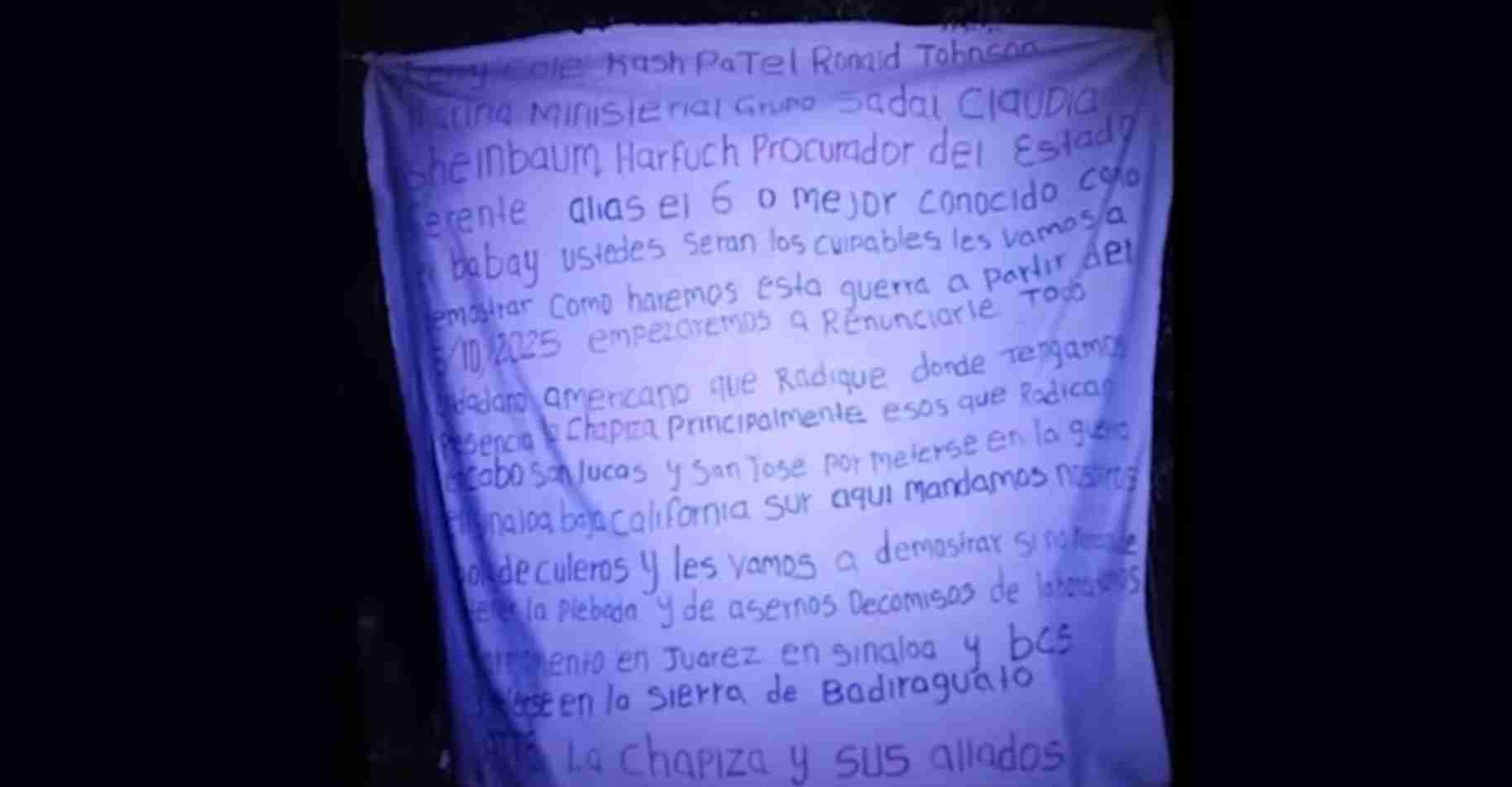
Narco-banners reportedly warn Americans to stay away from Los Cabos as officials dispute their existence
Reports in October 2025 circulated online claiming narco-banners from La Chapiza threatened Americans in San José del Cabo and Cabo San Lucas; Baja California Sur officials say investigators found no physical evidence those specific banners were ever placed publicly.
- Viral posts: Images and short videos showed white banners attributed to La Chapiza threatening Americans, shared widely on social platforms and travel forums.
- Official findings: Baja California Sur authorities say investigators found no physical evidence that the specific October banners were placed publicly, though similar banners were documented earlier in 2025.
- Security context: Analysts note narcomantas are common intimidation tools and can have real impact even when physical proof is unclear.
- Tourism risk: Travel experts warn perception of danger can harm local economies and advise visitors to follow official advisories and basic safety steps.
What was reported online
In October 2025, images and short videos circulated showing white banners with black lettering that claimed responsibility and threatened violence against Americans in Los Cabos. Many posts attributed the message to La Chapiza and included a Spanish passage translated in some shares as: “We’ll show how we’ll make this war on all Americans residing in areas where we have a presence & especially those living in San Jose del Cabo and Cabo San Lucas.” Social posts and travel forums amplified the material, prompting alarm among tourists and expatriate communities. Some of the viral coverage included links to YouTube footage that showed the banner images.
Official response and investigation
Baja California Sur officials publicly moved to calm fears, saying investigators found no physical banners matching the viral images in streets, plazas or other public spaces. State Attorney General Antonio López Rodríguez acknowledged that 46 similar narco-banners had been discovered across the state from April through July 2025, but emphasized the October banners singled out on social media remain unverified. Officials warned some circulating images could be altered or misattributed and urged residents and visitors to report sightings through official channels rather than social networks (Mexico Travel Secrets; Fox News).
How cartels use narcomantas
Criminal justice experts say narcomantas (narco-banners) are a long-standing propaganda and intimidation tool in Mexico. They are used to threaten rivals, pressure authorities, demand protection money or signal territorial control. Analysts note these messages target both local audiences and online communities, where circulation can amplify fear and influence narratives. Even without a physically placed banner, the spread of images can mimic the same psychological and social effects (Fox News).
Impact on tourism and traveler safety
Los Cabos is a major destination for U.S. tourists, and its popularity makes it vulnerable to extortion and intimidation tactics that can harm businesses. Travel safety experts and local hoteliers warn that perception of danger can lead to canceled bookings, flight changes and economic damage. Authorities advise visitors to consult official travel advisories, register with the U.S. State Department’s traveler services, and follow basic safety measures such as avoiding isolated areas at night and using verified transportation services (Fox News).
Verification challenges and the role of social media
Investigators note the rapid spread of images and the lack of physical evidence highlight the difficulty of verifying threats in the age of instant sharing. Social platforms enable alarming content to travel faster than official confirmations, and unverified reports can prompt real-world consequences — from travel cancellations to community anxiety. Security experts recommend relying on official communications from local governments, consular services and trusted news outlets (AOL).
Voices on the ground
Residents and tourism workers described mixed emotions: fear among some who saw the viral images, and frustration among others who worried online rumors would damage livelihoods. Hotel and restaurant staff reported increased calls from concerned relatives abroad, while many businesses saw only minor short-term reservation changes. Local officials and business owners continue to monitor the situation closely.
Implications for San Luis Obispo, California
Economic impact: San Luis Obispo County has strong travel ties to Los Cabos; concern about narco-banners could prompt residents to postpone trips, affecting travel agencies, airlines and tour operators that serve the Central Coast (Fox News).
Political and social effects: Local leaders may face calls to issue travel guidance, coordinate with travel industry groups, or address broader public debates about cross-border safety. Community groups and cultural organizations may need to balance safety messaging with support for continued cultural exchange.
Practical advice: Residents planning travel to Los Cabos should check official travel advisories, register with the U.S. State Department’s STEP program, and maintain contact with tour operators and lodging providers for updates.
Sources and further reading
- Fox News report on narco-banners and expert commentary
- Video coverage showing images attributed to the banners
- AOL reporting on the viral banners and official responses
- Mexico Travel Secrets summary of banners and attorney general’s comments
Note: Authorities in Baja California Sur continue to investigate and ask the public to report any direct sightings to local law enforcement. Travelers and residents are urged to follow official updates and verified advice from consular services and local safety officials.